Client
POWER OF BABEL
Industry
Dubbing
Products Used
VoiceQ Pro/Writer
How does a boutique studio in Toronto compete with the "dubbing cartels" of the industry? In this case study, we sat down with Eric Gehringas, President of Power of Babel, to discuss his journey from documentary filmmaking to leading one of the most versatile localization shops in Canada.
Eric shares insights on the fine balance between the "art of the voice" and the business of being heard. We dive deep into his "origin story," the evolution of Canadian French dubbing, and how Power of Babel delivered a feature film for Amazon Prime on an impossible 4-week timeline.
When was POWER of BABEL founded?
Power of Babel was born in the late oughts (during late 2010s) and operated as a side hustle for several years before Eric Gehringas transitioned it into his full-time business in 2020.
What was the primary driver to set up the business/org?
The primary driver was a major contract to produce tourism promotion videos in six languages following the Fukushima disaster in Japan. Eric and his original business partner realized they had a successful workflow and decided to build a business as a backup to their work in television and audio production.
What are the primary areas of the business/org?
The primary pillars are dubbing (specifically TV shows into Canadian French), subtitling for feature films and documentaries, and marketing translation for multicultural and immigrant markets (including Chinese and Punjabi).
What are the key workflow problems to solve?
Helping content producers who have "no idea how to go about" localization. This includes managing complex assets, navigating difficult languages like Arabic (right-to-left text and specific dialects), and providing a "Swiss Army knife" approach that covers sound, video, and text translation in one place.
What are the key sector trends driving change?
AI is significantly impacting the industry, particularly in audio description (AD). Additionally, there is massive consolidation in the sector, with most streaming content being funneled through a few global "behemoth" companies.
What are the key consumer trends driving change?
While technology is advancing, consumers still demand an authentic human element in entertainment. High-quality dubbing creates a "human experience" where voices enter the viewer's "head and heart," something Eric notes is currently difficult to achieve with automated AI voices.
Leadership, staff and great talent often play a huge role in organisational success. Can you share any insights on your approach and who has influenced your success?
Eric’s approach is centered on being a "problem solver" by finding experts in their specific languages. He has been influenced by talented collaborators, such as his original audio engineer and a long-time French voice director, who helped the studio gain expertise in languages they didn't personally speak. He prioritizes building flexible teams of creative people who are passionate about their craft.
With all the advancements in hiring great people, disrupting workflows and implementing technology what has been the quantitative and qualitative impact of these efforts?
Qualitatively, the use of specialized technology allows a small boutique shop to compete with massive "dubbing cartels." Quantitatively, it has significantly reduced recording hours—cutting down studio time to a "manageable" window for tight deadlines—while maintaining the high creative standards required by major platforms like Amazon Prime.
What are main technology platforms used at Power of Babel?
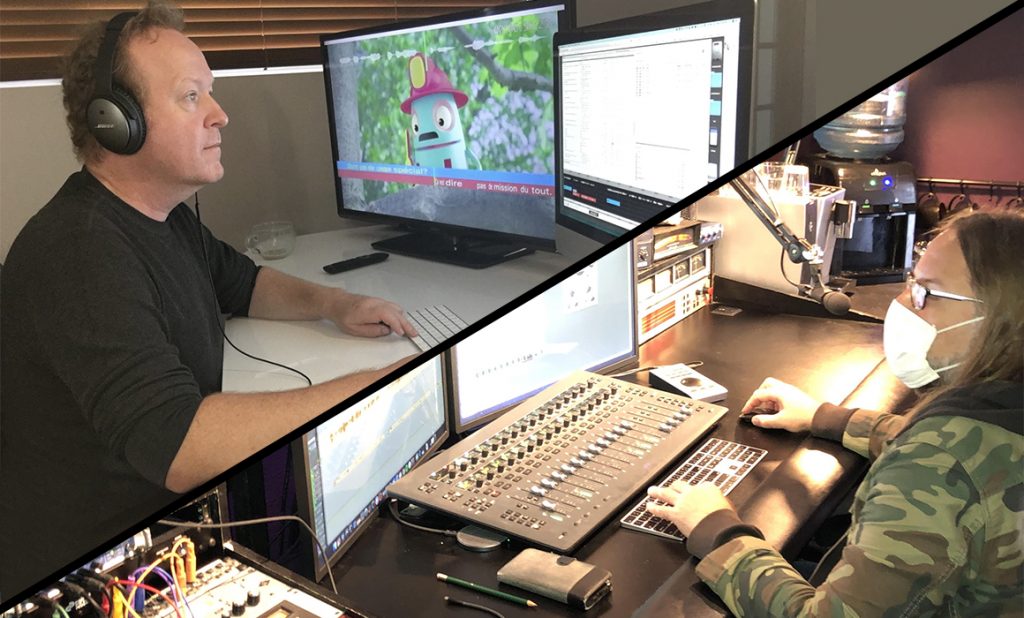
The studio uses VoiceQ specifically for lip-sync dubbing and kids' animation. For other projects like documentary voiceovers, they use a standard studio suite and "old-fashioned" recording methods, maintaining a flexible "Swiss Army knife" toolkit.
Eric Gehringas comments in his role as President during a French feature film project for Amazon Prime what it takes to achieve speed and quality.
Can you share any insights on a recent project? What is the project about as a story?
The project was a French feature film destined for Amazon Prime. It required a high-quality Canadian French dub to be completed on an extremely aggressive timeline.
What was this project about?
It was a live-action drama that required authentic, high-caliber performances from experienced Montreal-based talent to meet the standards of a major global streaming platform.
What were the challenges in the project?
The primary challenge was the timeline; the client initially asked for the project in two weeks, which was eventually negotiated to four weeks. Additionally, it required coordinating top-tier talent in Montreal while managing the technical adaptation from Toronto.
What were the key workflow problems to solve?
The main problem was the "tightest window possible" for delivery. Without a specialized tool, the adaptation and recording process would have taken far longer than the four weeks allotted.
How did you come across VoiceQ technology?
About a dozen years ago, a French voice director working with the studio heard about VoiceQ when it was in its early stages and suggested it for a feature film project.
Where does VoiceQ provide the most workflow value?
The most value is found in the Rythmoband and the adaptation tools. It makes the recording session intuitive for actors (even those with 50 years of experience who have never used it) and allows rookie child actors to pick up the process quickly.
Has this R&D provided good value for Power of Babel?
Yes. It has allowed the studio the freedom to take on the most complex part of video localization (lip-sync) without requiring a massive upfront spend on hardware, providing a high return on creative and profitable projects.
Why did you choose VoiceQ as competitive solution?
It allows a "tiny little shop" to compete directly with multi-billion dollar providers in Montreal. It offers a straightforward way to handle complex animation and feature film dubbing, making the studio a viable option for major clients like Amazon.
Final thoughts
Power of Babel’s story is a perfect example of what happens when you treat localization as more than just a service. Eric Gehringas didn't set out to build a "global behemoth"; instead, he created a "Swiss Army knife of localization" that thrives on being a true partner to content producers. By leaning into Toronto’s identity as a "modern-day Babylon," he has turned a former side hustle into a global engine for storytelling.
Even in a world where everyone is worried about AI, Eric’s journey proves that the "authentic human element" is still what makes a show popular internationally. As he puts it, when you watch a show dubbed by great actors, "those voices kind of enter your head and they enter your heart." It’s that human experience that a robot simply can’t replicate.
By empowering passionate, creative teams with tools like VoiceQ, Power of Babel has found a way to "compete with the dubbing cartel" and deliver massive projects—like a feature film for Amazon Prime—in the "tightest window possible." Ultimately, Eric’s success comes down to a simple, powerful philosophy: "We’re not just a sound studio... we actually work with our clients very closely." It’s this dedication to solving the "hard things" that ensures every story they touch finds its true voice, no matter the language.

Share
Up Next
Our paid trial gives you and your team full access. Create a project in minutes.